PERFORATION, ELLIPSE
Storefront for Art and Architecture
January 27, 2026 - March 22, 2026
Exhibition Publication
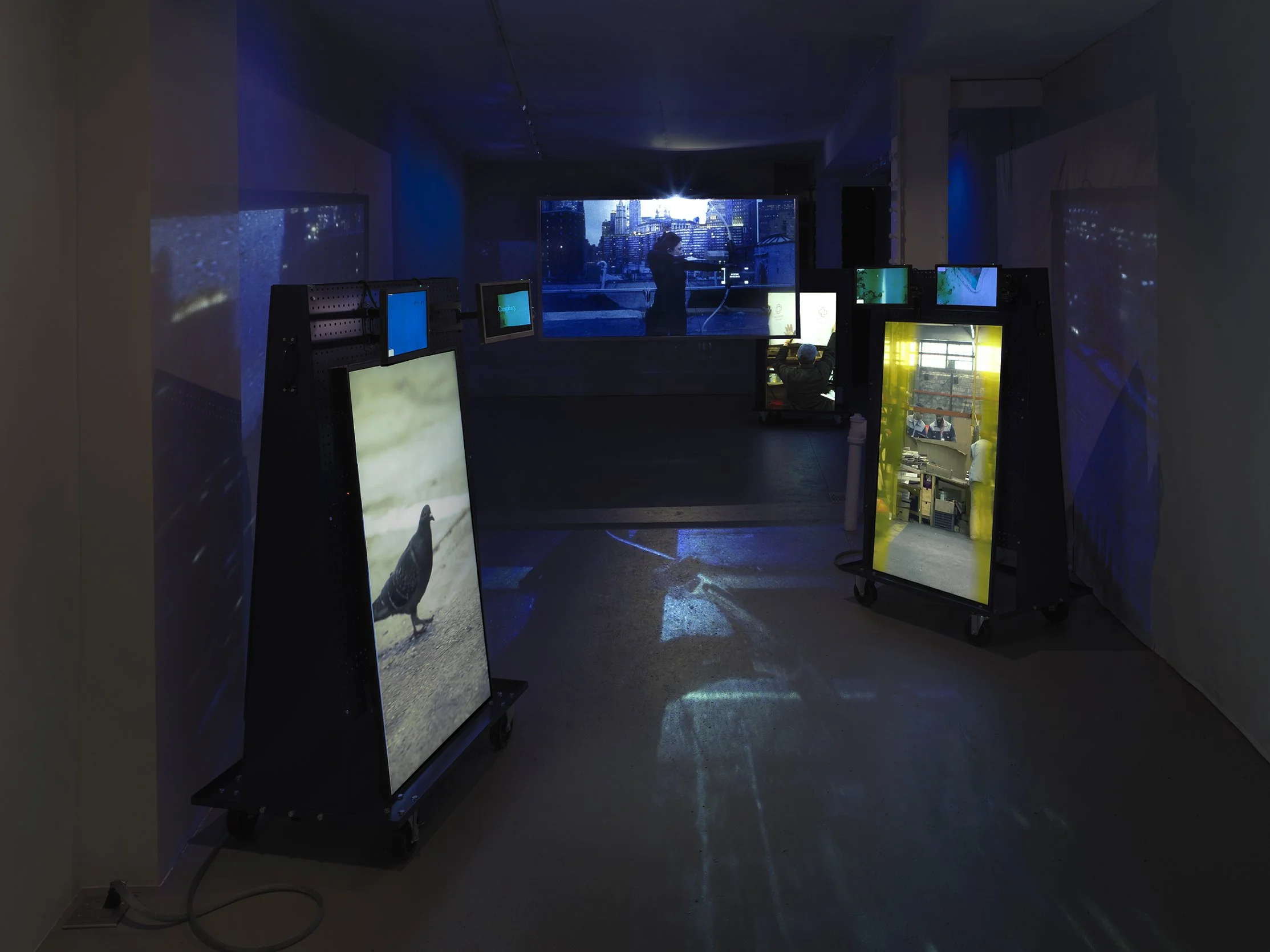
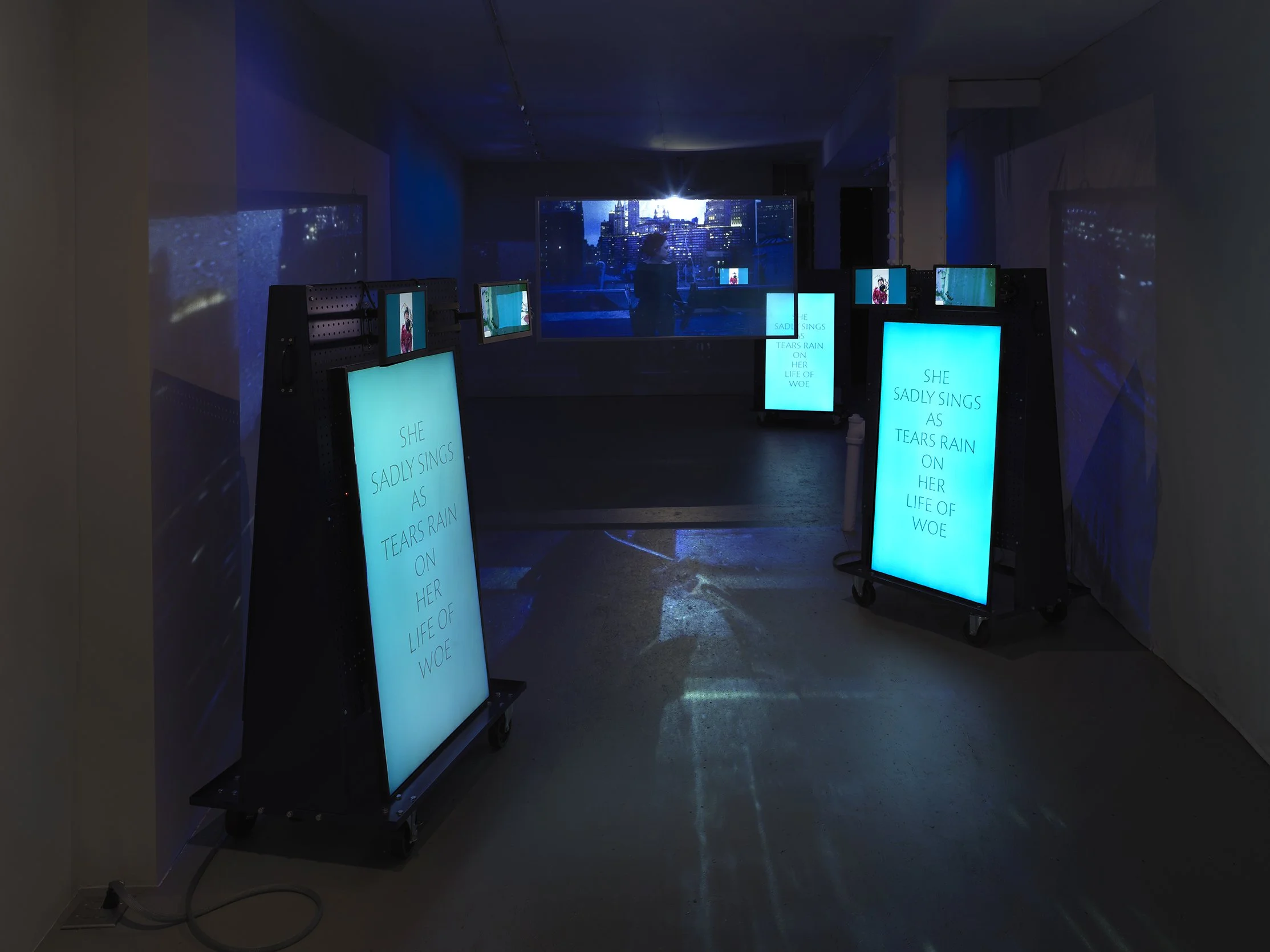
In the exhibition, Perforation, Ellipse by Alison Nguyen, we encounter a projected 16mm performance of the artist shooting an arrow across the dark city skyline. Before it lands, the arrow is suspended in a perpetual state of arrival and departure, recalling Zeno’s paradox, a philosophical argument which proposes that motion is divisible into infinite stillness. The sound of the arrow hitting its off-screen target punctuates the cuts of video footage in a series of sculptures. In conversation with the formal qualities of cinema, the exhibition embraces the complications of this paradox by exploring the tensions within movement, time, and cultural memory. Nguyen orchestrates a dynamic architecture of screens, drifting between narrative passages in her film Aisle 9, sensorial abstractions, and archival online footage of Vietnamese bolero music.
INSTALLATION DOCUMENTATION
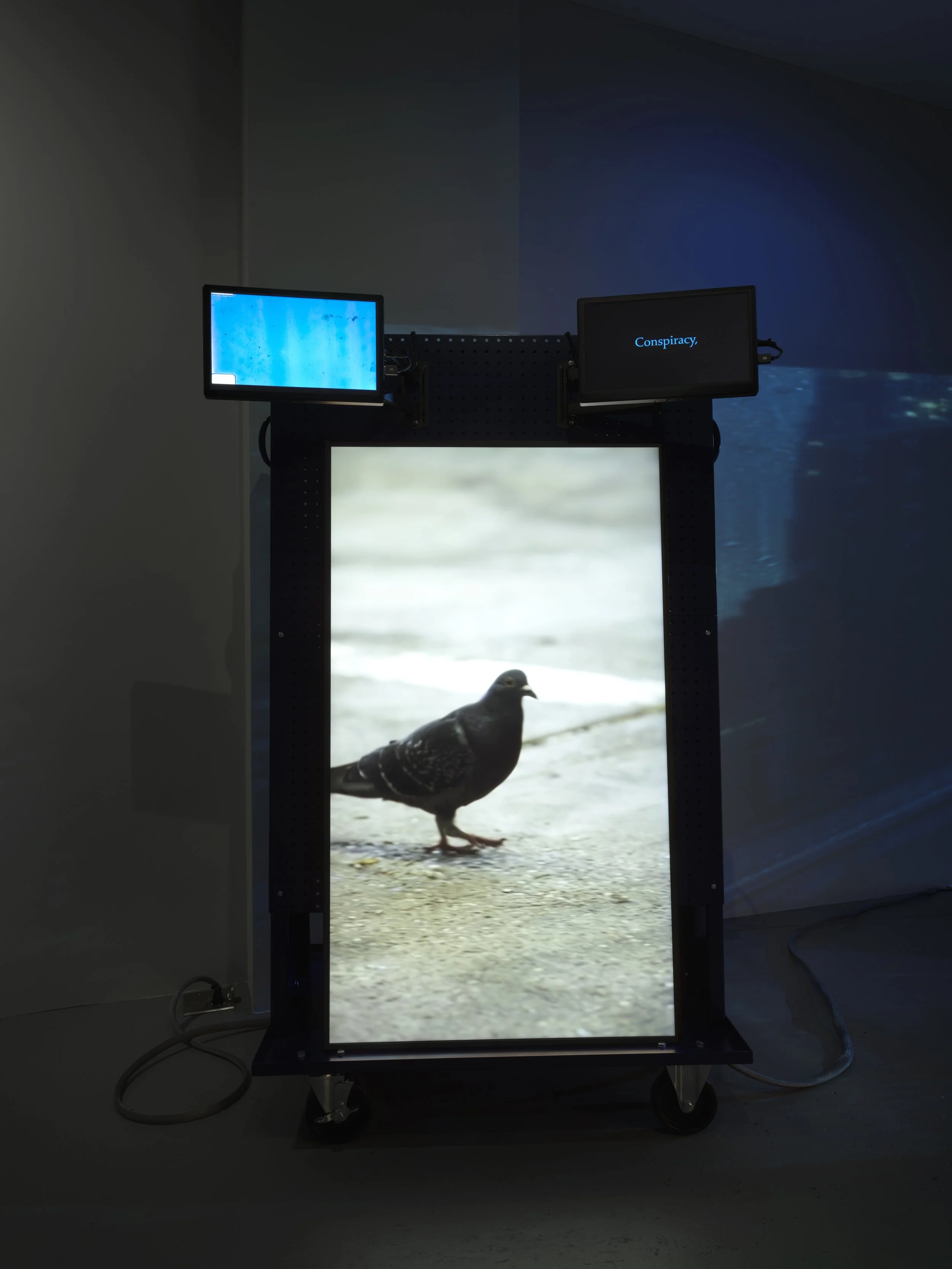
Alison Nguyen, 2026, Perforation, Ellipse V01; Multichannel video, color, sound, glass screen, steel, casters, gold on aluminum, and colored gels.
Excerpts of 11 minute 16 second loop.
Set in a speculative future, Aisle 9 follows a group of workers who hang out after hours in a hosiery warehouse. They shoot archery, play cards, and trade conspiracy theories as their workplace lurches towards foreclosure. An errant arrow leads them to a sequestered storage area overflowing with mysterious boxes marked with the logo of an unknown tech company. Inside the boxes they discover a trove of government-banned media prompting them to turn Aisle 9 into an adhoc viewing room.
Across the installation, melodies of once forbidden bolero music, also known as nhạc vàng (“yellow music”), periodically surge across the multiple channels of video, aligning disparate images on the sculpture’s monitors, into a shared emotional frequency. Following the American War in Vietnam, the Vietnamese government banned bolero music for its sentimentality and romantic lyricism, however, the genre has recently reentered mainstream circulation. It endured underground in Vietnam because it was condemned, forced to exist quietly in households; and in the United States and abroad, disseminated through diasporic tapes, and transnational cabarets such as the television show Paris by Night. In the U.S. today, different but parallel constraints are performed, shaping what may be seen, shown, or archived. Nguyen stages censorship as a paradoxical system that can reproduce the very meanings it seeks to suppress, opposing a binary of freedom and repression. Cutting between partial stories and obscured gestures, Nguyen asserts that images withhold just as much as they disclose, reminding us that cultural memory is always negotiated under uneven conditions. Viewers must read between the lines to discern the encoded politics, and attune themselves to the residues that censorship inevitably leaves behind.
- Jessica Kwok







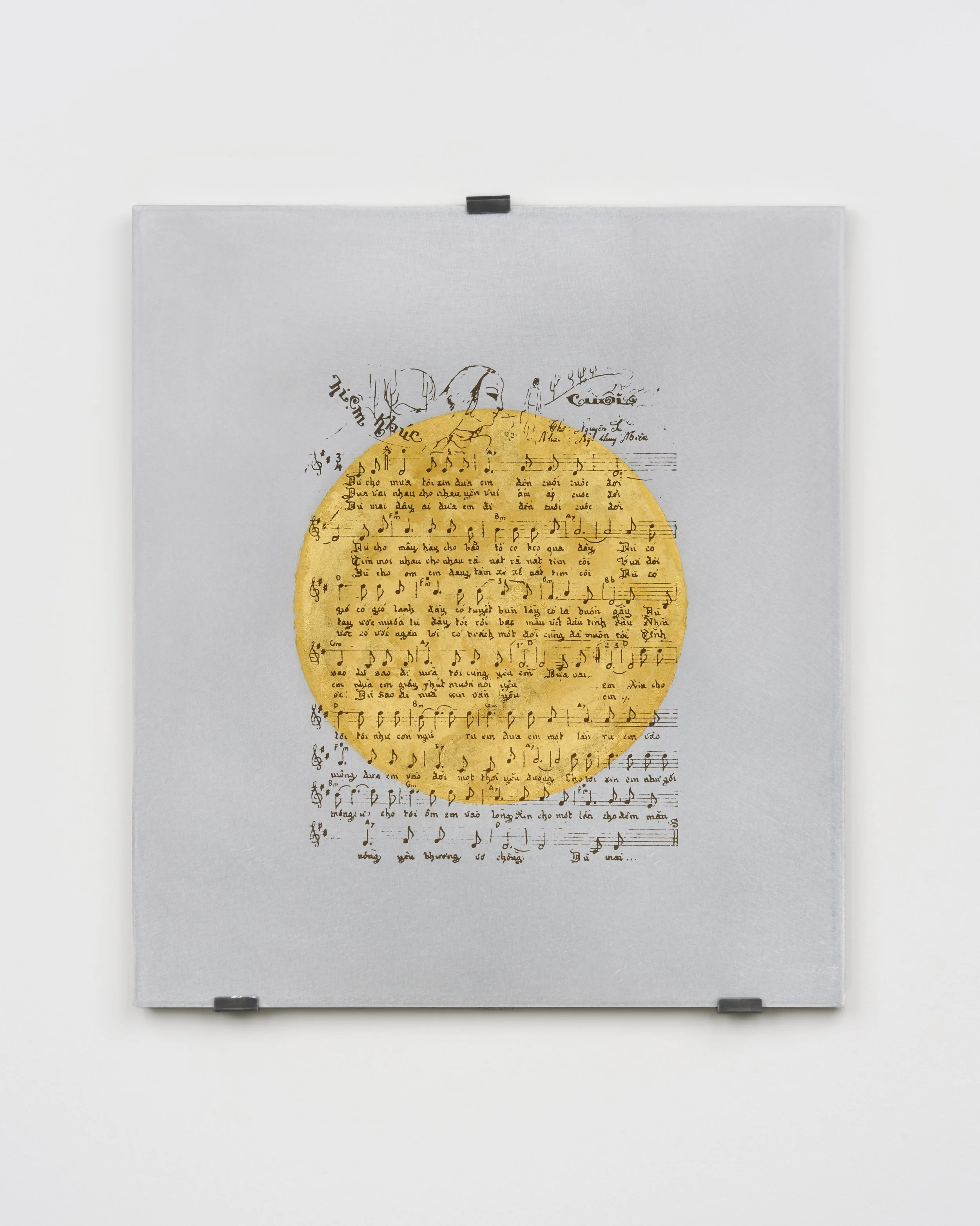
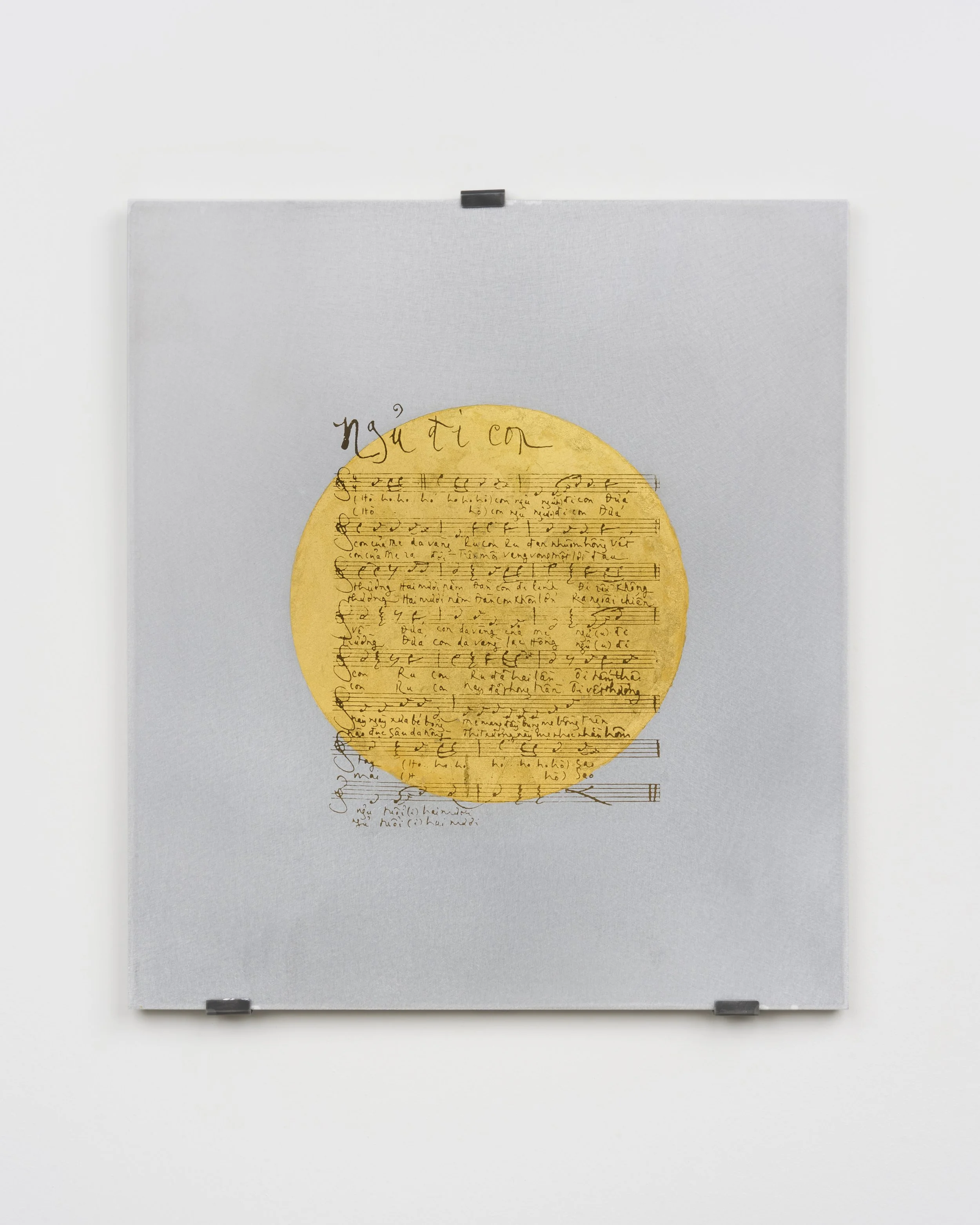
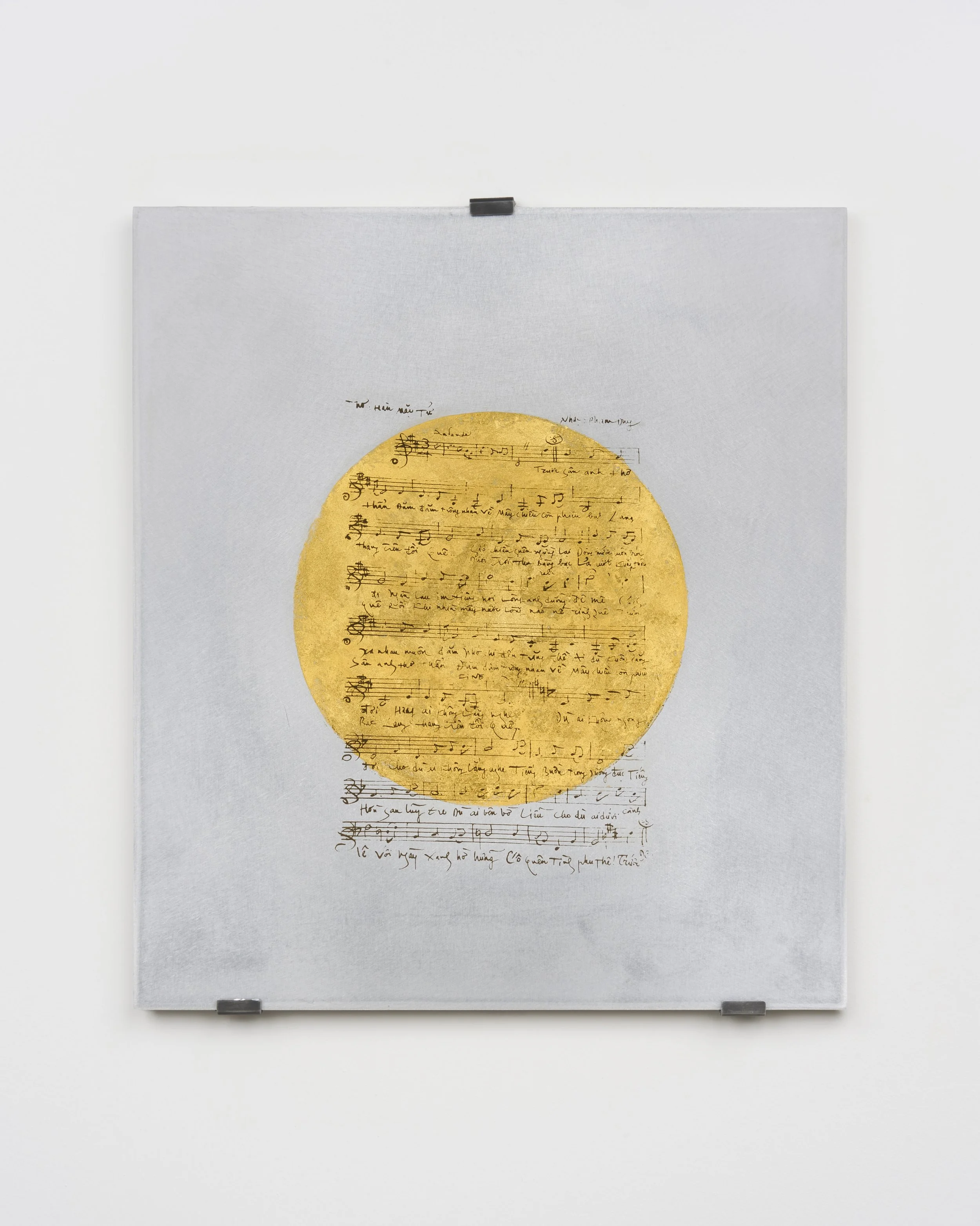
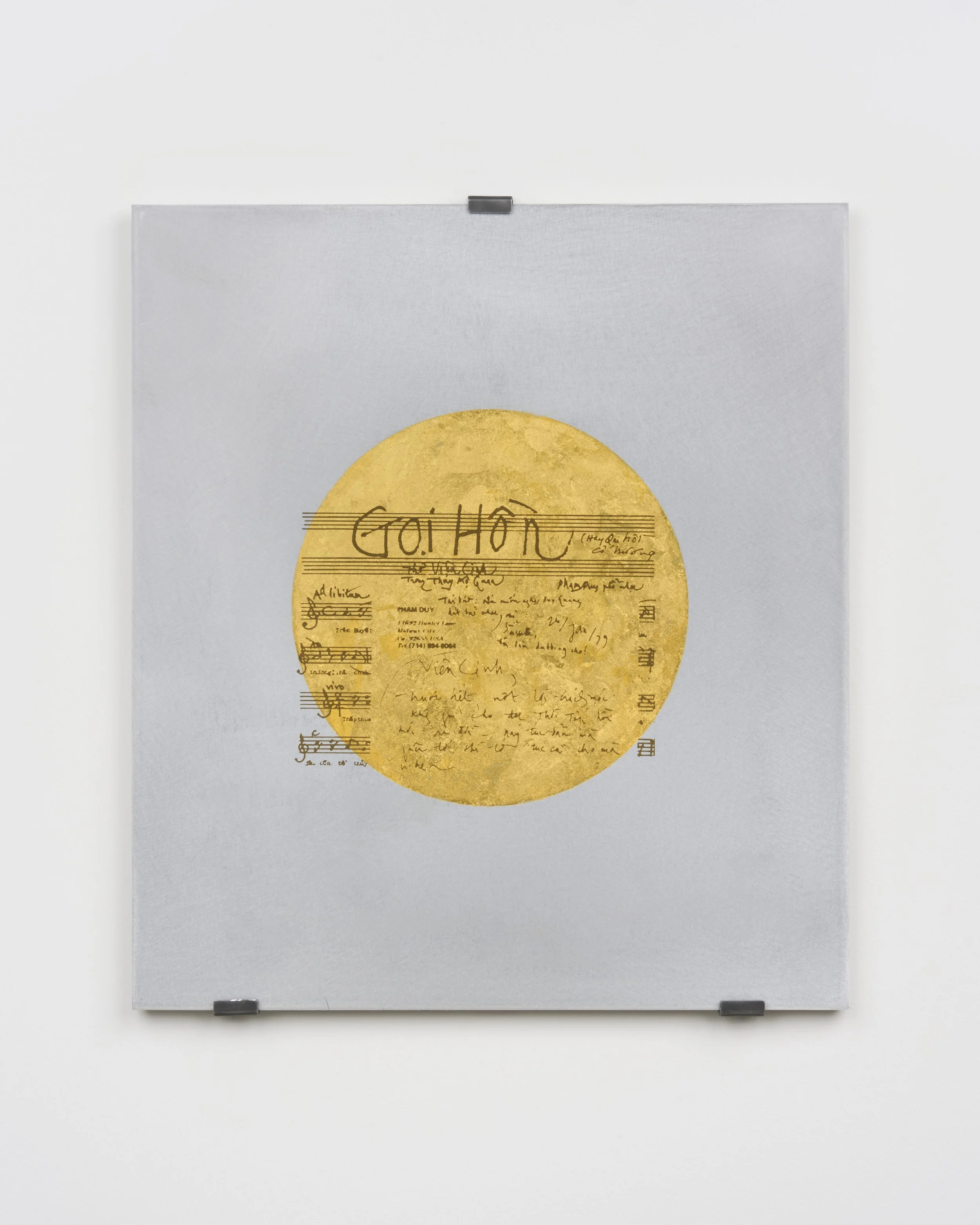
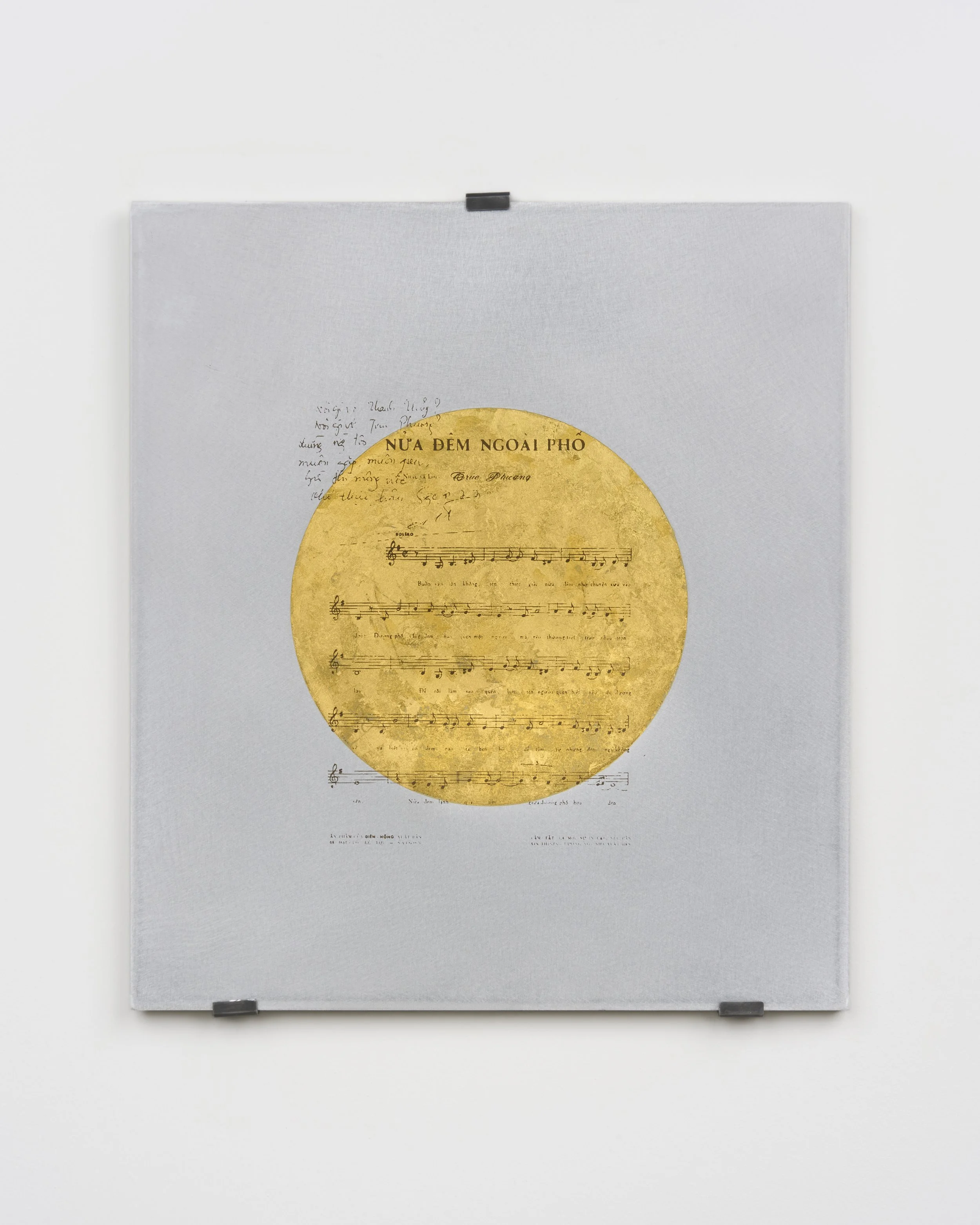
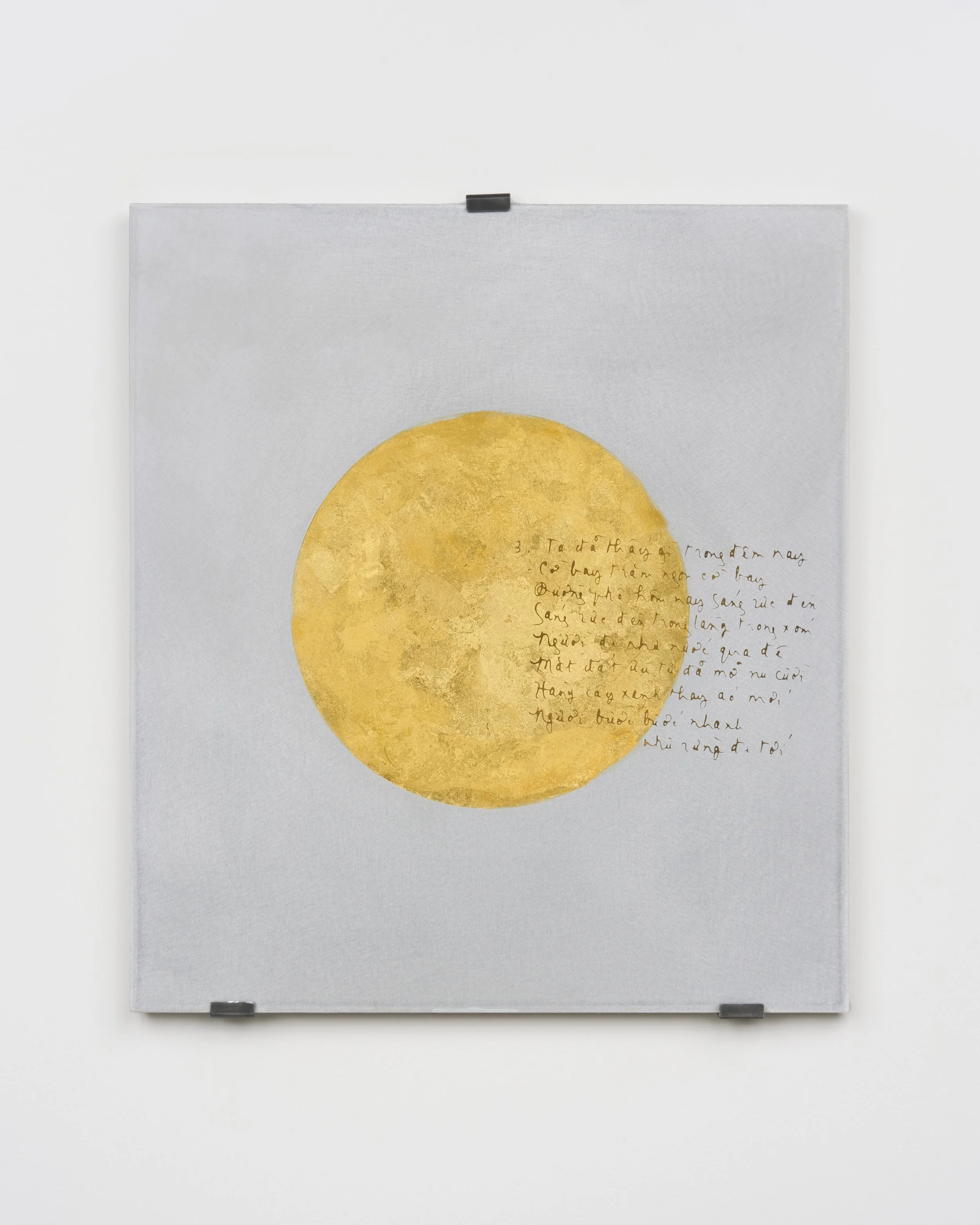
Ellipse Series, 2026, gold on aluminum with custom hardware, 16” x 18” x 3/8”